Mission & Vision
Building for the centuries
Construction is the last major industry untouched by modern technology. We’re changing that with autonomous robots on the construction site.
Why construction
Over the last century, almost every industry has improved. Construction is the one that went backwards.
Chemicals, apparel, manufactured goods, consumer electronics, transportation: across the board they’ve grown cheaper and better, and society’s net wealth has risen with them. And while some industries such as healthcare get critiqued for rising costs, it’s at least hard to argue against major improvements there as well, from basic vaccines to advanced genetic therapies.
None of this is true for construction: in almost every possible way, construction has become more expensive (on an inflation-adjusted basis); slower; less durable and less aesthetically pleasing. In most cities around the world, the most expensive and desirable buildings today are also the oldest buildings-something that’s hard to imagine in any other industry. Construction feels like the last industry left completely untouched by modern technology.
The relative inefficiency of the construction industry is no secret. Unlike other industries, where advances in technology have continuously increased what a single worker can accomplish, construction remains as labor intensive as ever. Since 1945 in the US, productivity in manufacturing has increased 8.6 times. In the early 1800s, agriculture employed over 80% of US workers - today, it employs less than 2%. But construction productivity has only increased by 10% since 1945 - and construction productivity in the US has actually decreased since the 1960s.
Buildings are built no faster today than in the past. The Empire State Building, completed in 1931, famously took merely 410 days to build. The Chrysler Building, completed in 1930, took 563 days. But 432 Park Avenue, completed in 2015, took over 1500 days. Average time to build a single family house has gone from 4.8 months in 1971 (the earliest year data is available), to 7 months in 2019. Even scaling this by average house size (around 1600 square feet in the early 70s, compared to over 2600 square feet today), we’re still slower today.
Moreover, construction sits economically upstream of most other activities. It’s the machine that creates all of our built environment. It represents 13% of worldwide GDP. It’s the source of 11% of global CO2 emissions (plus an additional 28% of annual CO2 emissions from the energy use of those finished buildings.) It will only get more expensive to build due to a secular trend of declining skilled labor. Not enough people are working on these challenges relative to the importance and scale of this industry.
Most people working on solving this problem today are trying to do it off-site, using pre-fab and modular components. This approach has been tried for decades and we believe it will only work in a niche context. In our view, the solution must be to fix things on-site, where the end-product needs to be.
Our vision
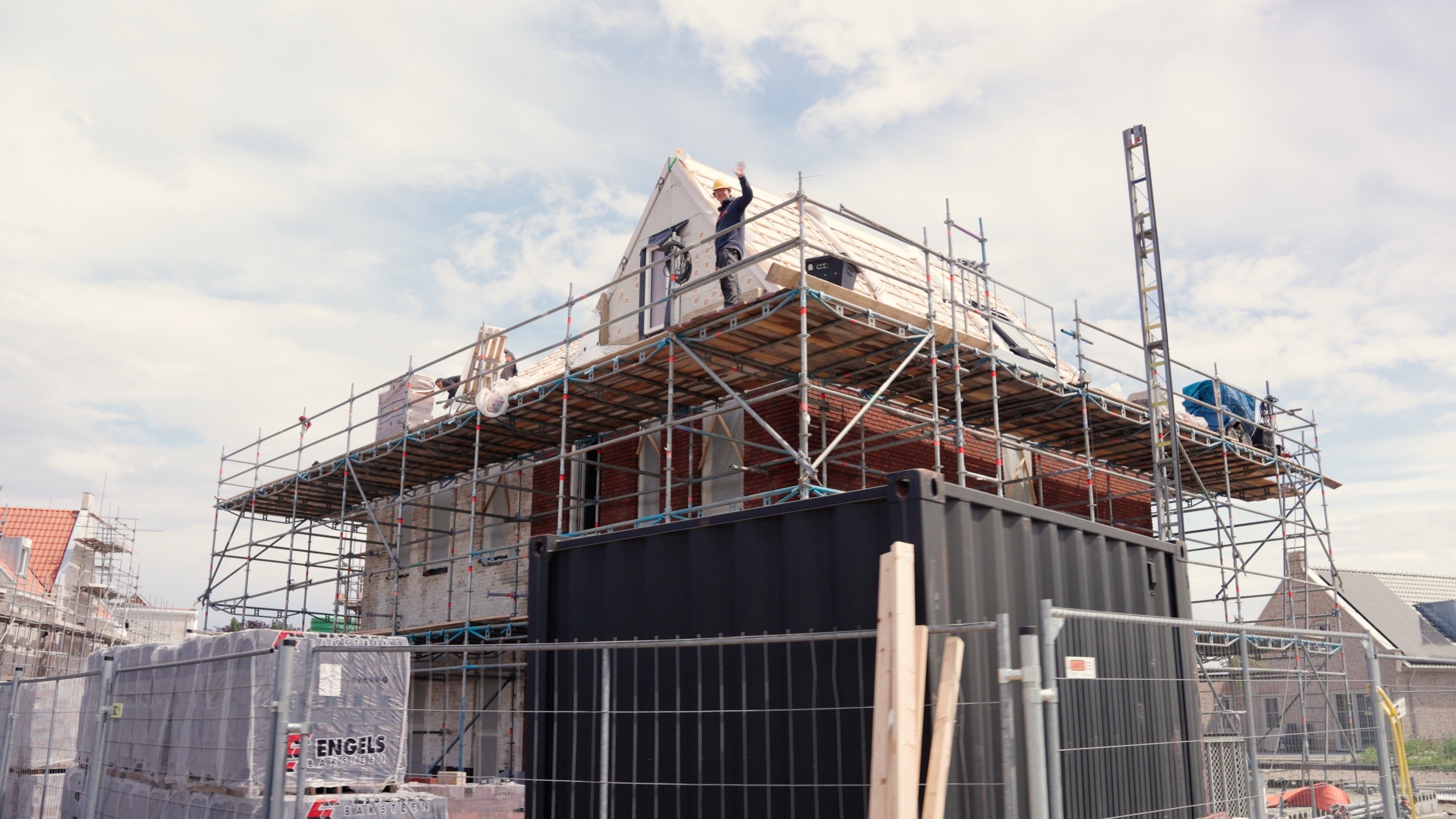
We want a future where everyone can afford a high-quality house or apartment in a beautiful city or village.
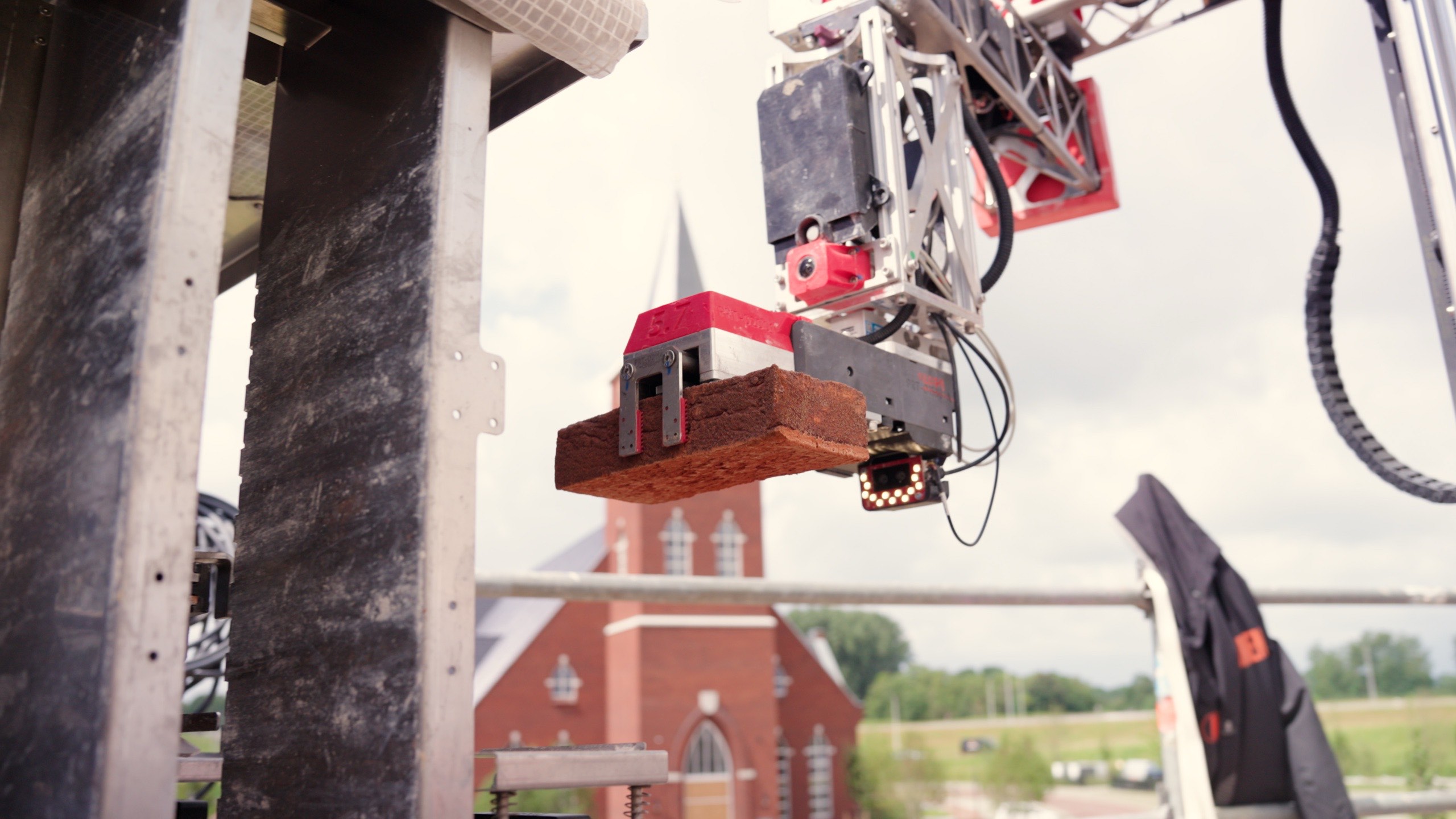
We believe that the only way to turn this vision into reality is to fully automate on-site construction. To break the spell of stagnation in construction we plan to bring the full power of software, robotics and machine vision to the construction site. The core technology we are developing is a suite of autonomous, electric robots which can work around the clock. Our approach will bring two main benefits:
Affordable housing
Everyone needs housing and housing sits upstream of almost all other economic inputs for people. The lack of affordable homes for people is tearing apart the seams of society in many developed countries today, while construction is only getting more expensive as the number of craftsmen continues to decline.
Beautiful artisanship
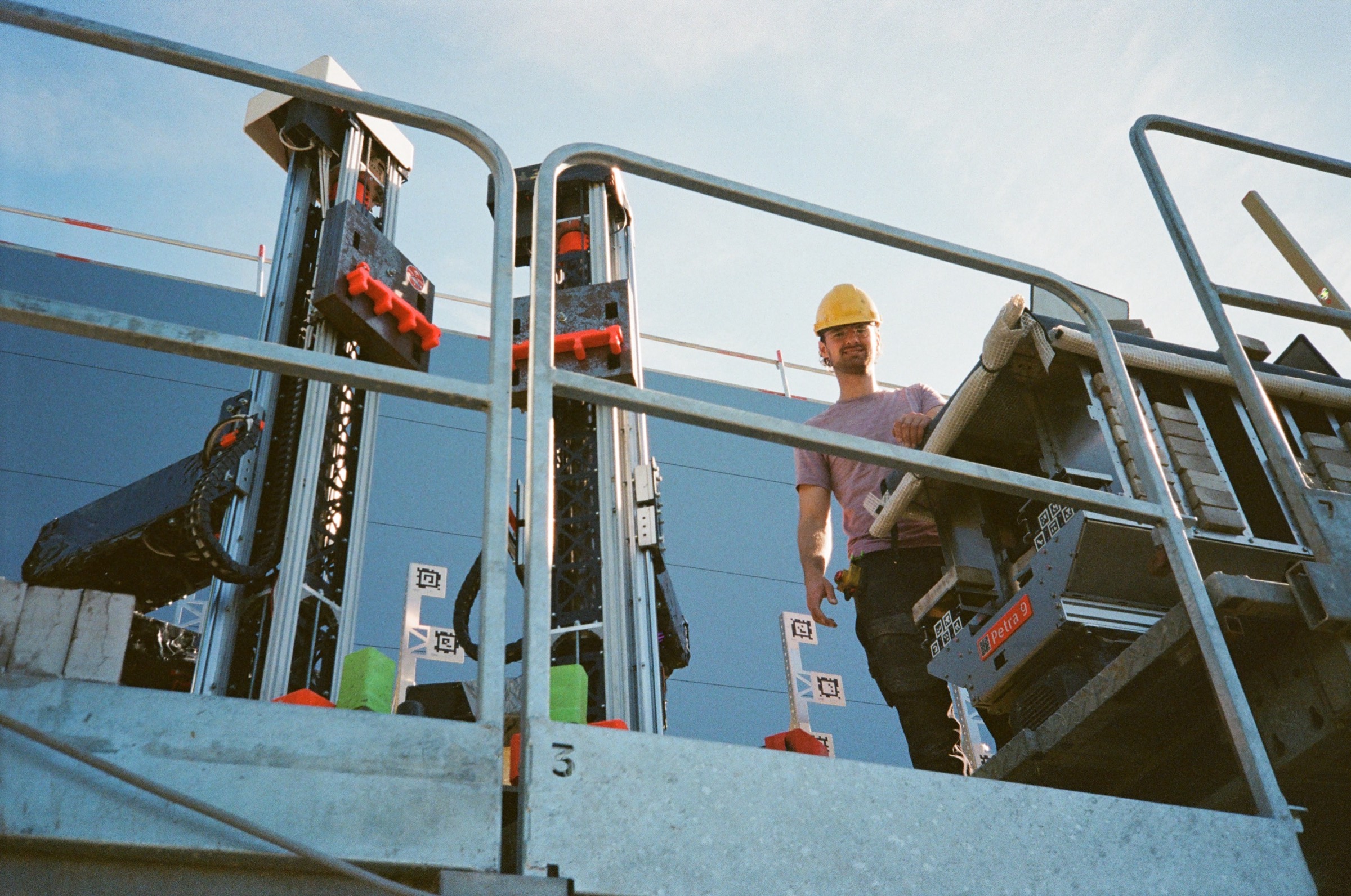
Unless you’re a full-on post-modernist who believes everything is subjective, you might have noticed that aesthetics have taken a backseat in our built environment since World War 2. We know that people are willing to spend thousands of dollars to spend a week in historic city centers as tourists, and many are willing to pay significantly more to live in historic housing. (Can you name other industries where a 100-year old product commands a premium to the newest and latest in normal usage?)
With our software-defined robotics, building something intricate, beautiful and custom won’t require more labor and won’t need to be more expensive, and we intend to bring that beauty back to our world.
Common questions
Why not humanoids?
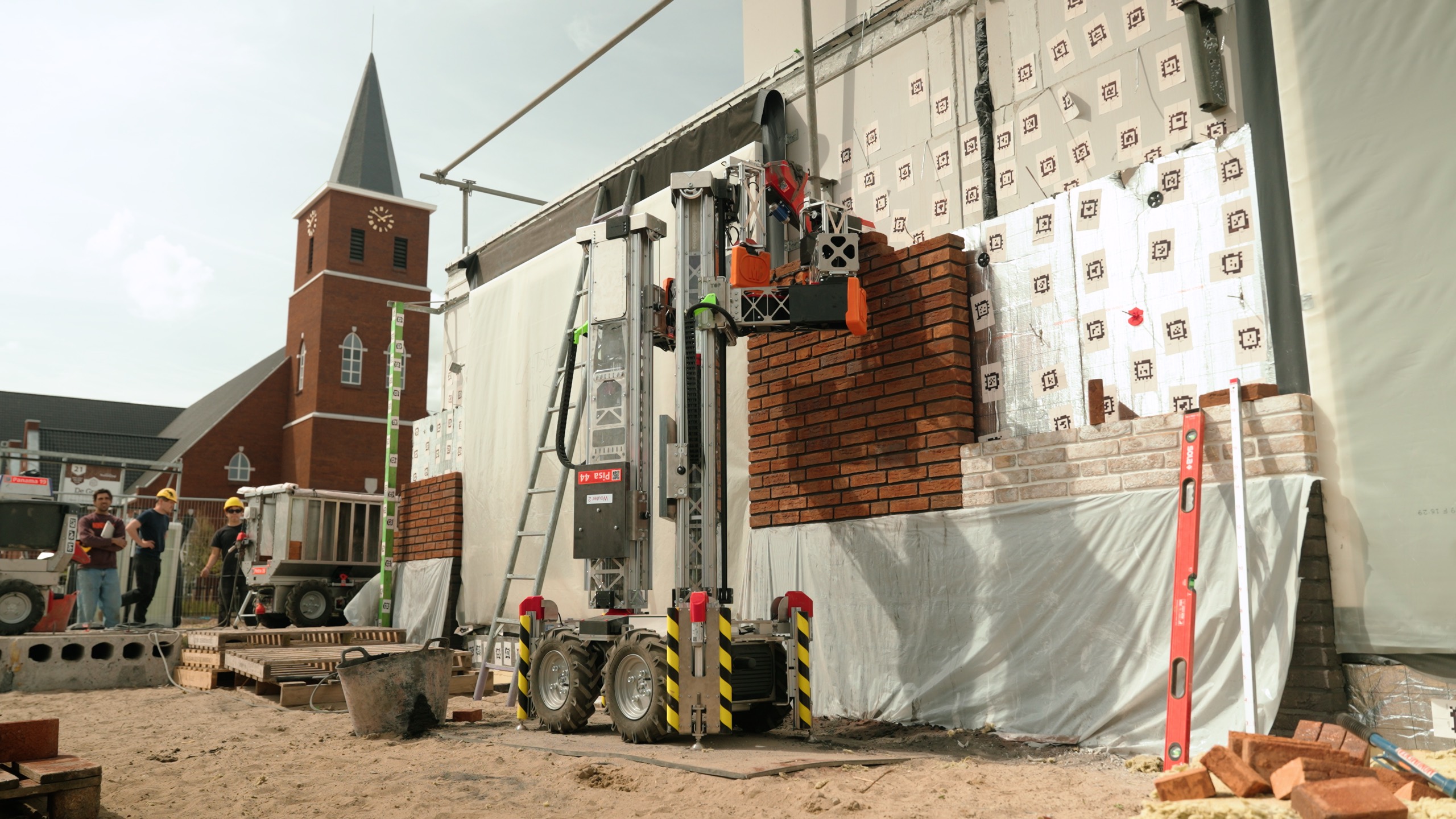
Humanoids make sense where you have to fit into a world built for people, like homes and offices. A construction site is the opposite. It is already a heavily mechanized environment, so it is almost always cheaper and safer to adapt the tools for automation than to build a machine that mimics a person using them. The low-value work is better replaced than imitated: an autonomous supply vehicle beats a humanoid pushing a wheelbarrow. And the high-value tools are essentially vehicles already, like a crane or a forklift, which you would drive directly rather than seat a robot inside.
The economics point the same way: a humanoid carries several times the bill of materials of a purpose-built machine, which is decisive for payback and unit economics. And the hard part of construction was never the body. Placing a brick means surveying the site, aligning to real-world references, and understanding what the design actually asks for. That depth is what the job needs, not a human silhouette. If general-purpose robots ever do become the right tool for parts of this work, we are the best placed to deploy them, because we are already on real sites.